 Tiny Hands Play
Little House
A cosy dollhouse and garden: tuck the friends into bed!
Play Little HouseFree · No ads · No account · Phone, tablet and laptop
What it is
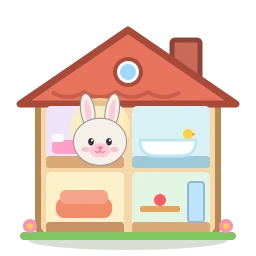
Little House is a calm dollhouse on a screen. The front wall is off, so you can see into all six rooms: a bedroom, a bathroom, a playroom with bunk beds and a rocking horse, a laundry, a living room and a kitchen. A garden with swings, a slide and a sandpit is on one side, and a back garden with a picnic table, an apple tree and a paddling pool is on the other. Five little animal friends live there, a bunny, a bear, a cat, a puppy and a panda. Pick one up and put them anywhere. In a bed they snuggle down and snooze. In the bath bubbles float up to pop. At a table they eat whatever is on their plate. Down the slide they go, wheee. Nearly everything can be tapped: lamps, curtains, the radio that makes everyone dance, the fridge and the oven that send food to the table, the washing machine, the watering can that makes the flowers grow. The sun in the corner turns day into night; the lamps come on, and when everyone is tucked up in bed a lullaby plays. There is no score, no timer and nothing to get wrong. When the game opens, a little hand shows how to carry a friend, and now and then a friend thinks of something it would like (food, a bath, a song, a game or bed) and the hand shows how to help.
How to play
- On a laptop or desktop: Drag a friend with the mouse and let go on a bed, the bath, a chair, the swing or the slide. Click things to make them work. Drag the sky or the floor, or press the arrow keys, to look around. N or Space turns day into night.
- On a tablet or phone: Drag a friend to a bed, the bath, a chair, the swing or the slide. Tap the lamps, the radio, the fridge, the oven, the apple tree and more. Swipe the sky or tap the big arrows to look around, and tap the sun to make it night.
What children learn
- Pretend play: feeding, bathing and putting friends to bed, the routines children know from their own day
- Words for rooms and things at home and in the garden: bunk bed, bath, fridge, swing, slide, sandpit
- Cause and effect: every lamp, tap and button does something you can see and hear
- Looking after others: friends show what they would like, and helping them makes them happy
Tips for parents
Play alongside and talk about what the friends are doing: "Bunny is hungry. What should we give her?" Act out your own day: breakfast at the table, a bath, stories in bed. The goodnight scene is a nice way to talk through your child's real bedtime routine, but play it earlier in the day: screens are best switched off an hour or two before bed.
Questions parents ask
- Is there a goal or a score?
- No. Little House is open-ended pretend play: there is no timer, no score and no way to get it wrong. The friends sometimes think of something they would like, but those wishes are gentle suggestions that fade by themselves.
- My child doesn't know what to do. How do they learn to drag?
- When the game opens, a little hand picks up a friend and carries a see-through copy of it to a bed or a swing, and it shows this again if nobody has been moved yet. When a friend wishes for something, the hand shows how to help it. Two-year-olds may need a grown-up's hand over theirs the first few times.
- Is it a good game for bedtime?
- The game is calm and has a goodnight scene with a lullaby, which makes it a nice way to talk about bedtime. But the CDC recommends no screens for an hour or two before bed, so it is best played earlier in the day.
- Is the house saved?
- Yes, on your device. Where each friend is, which lamps are on, the food on the table and whether it is day or night are all still there next time. Nothing is sent anywhere and there is no account.
Read the guide
Pretend Play: Why Toddlers Love Dollhouses and Daily Routines — How pretend play grows from two to five, why toddlers love acting out meals, baths and bedtime, and how to keep dollhouse play calm and open-ended.