 Tiny Hands Play
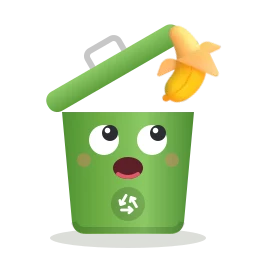
Sort It Out
Feed the litter to the right bin and clean up the park!
Play Sort It OutFree · No ads · No account · Phone, tablet and laptop
What it is
Sort It Out turns tidying up into a game. Litter tumbles into the park: a banana peel, a newspaper, a tin can. Drag each piece to the right bin. The bins are characters: their eyes follow whatever you carry, the right one opens its lid like a mouth, gobbles it up, burps and says what it was; the wrong one shakes its head and spits it back out, with no penalty. Every right answer cleans the place a little: the grass gets greener, flowers bloom, a butterfly arrives and finally a bird and the sun come out. Then it is on to the beach, the playground, the garden and a picnic spot. It starts with three bins, each showing a big picture of what it eats (food scraps, paper, plastic and cans), and a glass bin joins once your child gets the hang of it. There are no words on the bins, so children who can't read yet can play on their own.
How to play
- On a laptop or desktop: Drag a piece of litter to a bin with the mouse. Number keys 1 to 4 send the first piece to bin 1 to 4.
- On a tablet or phone: Drag a piece to a bin, or tap the piece and then tap the bin. Tap a bin on its own to hear what it eats.
What children learn
- Sorting and classifying by type
- Which things are food scraps, paper, plastic and cans, or glass
- New words: each bin says the name of what it ate
- Cause and effect: tidying makes the place come alive
Tips for parents
Sort the real recycling together after playing: ask which bin the cereal box or the jam jar would go in. Bin colors differ between countries, so the game uses pictures on the bins; point out the pictures on your own bins at home.
Questions parents ask
- Is there a timer or a score?
- No. There is no way to lose. A wrong bin just shakes its head and gives the piece back, and the right bin gives a little wave.
- How do children who can't read know which bin is which?
- Every bin shows a big picture instead of a word: an apple for food scraps, a newspaper for paper, a tin can for plastic and cans, and later a jar for glass. After ten right answers in a row the glass bin joins; if it gets too tricky, the game quietly goes back a step.
- Do the bins match our council's colors?
- Bin colors vary by country and town, so every bin also shows a picture of what it takes. The items in the game are ones that go in the same kind of bin almost everywhere.
Read the guide
Sorting Games: How Children Learn to Classify (and Recycle) — Why sorting is one of the first thinking skills, how it grows from colors to categories, and how a recycling game turns it into a habit.